


Roll-on / roll-off
Cars are driven on and off a vehicle carrier. Check the carrier's acceptance rules, operating-condition requirements, ports and arrangements for loose items.
Plan the route, documents and handover for your vehicles.

KEEYAK coordinates your vehicle shipping requirements with the exporter and transport providers. We collect the route proposal, charges, document requirements and handover contacts.
You receive a cost proposal first. Booking references and departure updates follow once the transport is arranged.
The vehicles, destination and available carrier services determine the plan. Your order sets the handover point and the work included.

We request options from transport providers using the vehicle dimensions, quantity and destination.
We coordinate the required documents and vehicle details with the exporter and your receiving party.
We pass on booking and dispatch updates from the provider and coordinate receiving instructions.
Start with the destination, vehicle dimensions and quantity. Carrier acceptance, handling arrangements and available services determine which options can be quoted.
Cars are driven on and off a vehicle carrier. Check the carrier's acceptance rules, operating-condition requirements, ports and arrangements for loose items.

Cars travel in a container with an agreed loading and securing plan. Check usable space, vehicles per container and handling at both ends before comparing the price.

A road or other land route can be considered where a service is available. Check border transfers, documents and the final handover point for the proposed route.
We request an itemized proposal from the transport provider. It lists main freight, handling and destination costs separately, with the total up to your chosen handover point.

Domestic movement, storage, port handling, preparation and loading, with any charges that depend on actual handling identified.
Proposed route and service, quoted rate, validity and booking conditions.
Whether cover is included or separately arranged, the risks covered and the contact and evidence needed for a claim.
The handover point and responsibility for terminal handling and onward transport. Your importer or agent supplies local clearance, tax and registration estimates.
Dispatch, carrier departure, arrival and collection have separate dates. The schedule should distinguish estimates from confirmed dates and name the contact for transport or clearance updates.
We coordinate the document list with the exporter and destination importer, then pass on the applicable records from the issuing parties. Review consignee and vehicle details on the drafts before they are finalized.
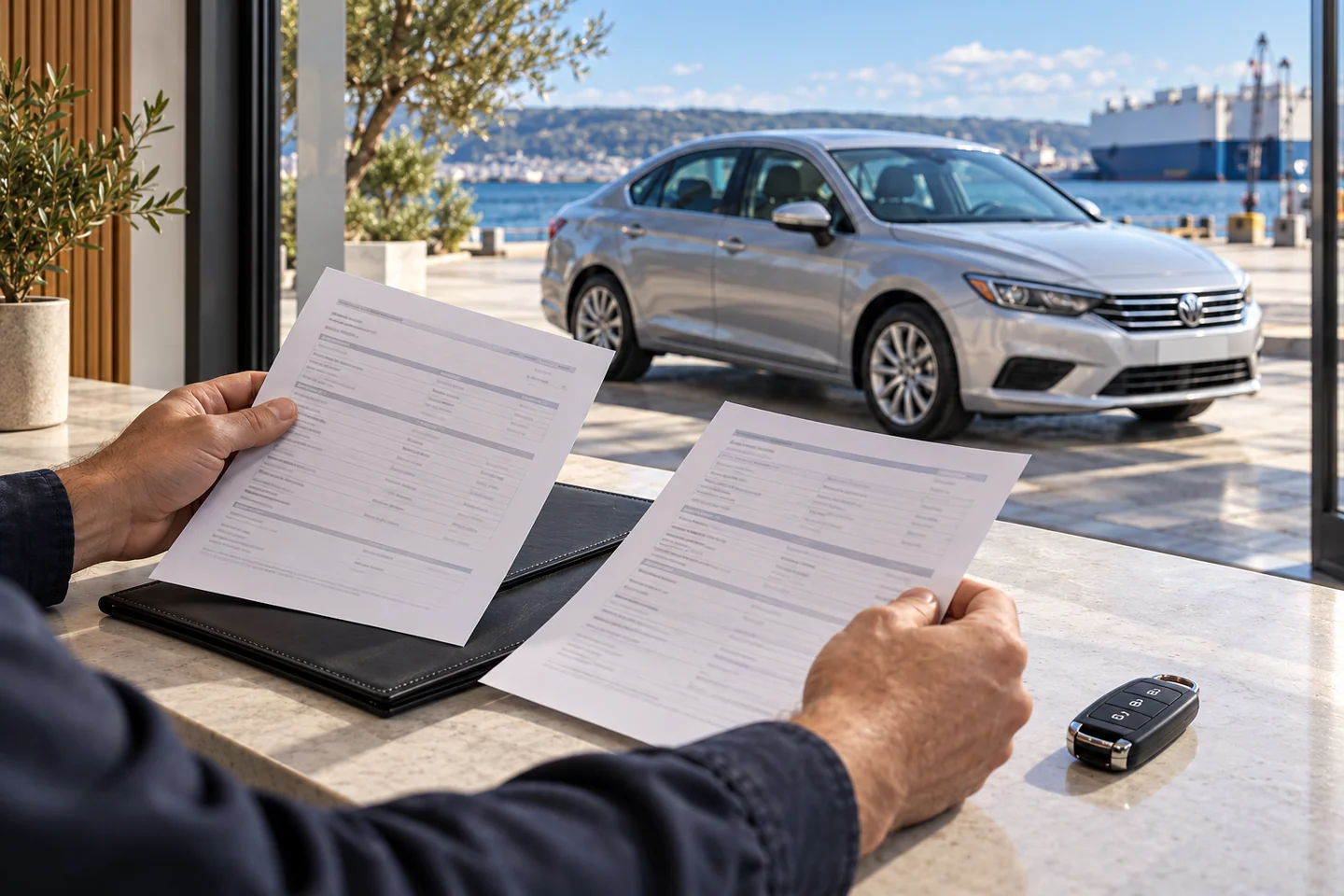
Issued for the order by the relevant seller or exporter, identifying the parties, vehicles, quantities and supplied items.
Issued by the transport provider. Sea shipments normally use a bill of lading; the route determines the document and release method.
Supplied where required and available for the exact vehicles. Your destination importer establishes which records are accepted locally.
Vehicle identifiers, dated condition photos, supplied-item list and transport references from the parties handling dispatch.
This is a document checklist, not a record of a completed shipment. Order-specific documents and photographs identify the actual vehicles and transport movement.
We coordinate the departure record with the party handling dispatch. It identifies each car and lists its condition photos, keys and supplied items for the receiving party to check on arrival.

Identifiers, market version and quantity should match the order and relevant transport documents.
Keep dated exterior and interior views. Record any existing marks with enough context to locate them on the car.
List the keys, accessories and accompanying documents. Agree how loose items will be packed and handed over.
Keep loading or securing evidence where provided, the transport reference and the named receiving contact.
Compare arrival condition with the departure file while the receiving records are being completed. If you find a difference, follow the shipment's reporting procedure and preserve the evidence.

Check identifiers and quantity, then compare the visible condition, keys and other supplied items.
Take dated overview and detail photographs. Record missing items or document discrepancies in the receiving record.
Contact the carrier, claims contact or order contact specified for the shipment. Check the applicable reporting deadlines.
Retain transport references, condition photos and correspondence. A transport-damage claim and a warranty issue may follow different routes.
Include the vehicles, quantity, destination country or port and preferred timing. Tell us where you expect the handover to take place and whether you need onward transport.